
Sausages, those savory cylinders of meaty goodness, have been a staple of diets around the world for centuries. Whether you’re enjoying a classic American breakfast with sausage links, savoring a bratwurst at a German beer festival, or indulging in a chorizo taco, sausages come in all shapes, sizes, and flavors. But are all sausages made of pork? In this article, we’ll dive into the world of sausages, exploring their origins, ingredients, and the wide variety of meats used to create these delectable treats.

The Sausage Story: A Brief History
Before we jump into the meaty details, let’s take a quick look at the history of sausages. Sausages have been a culinary tradition for thousands of years, dating back to ancient civilizations. The concept of encasing ground or minced meat in a casing made of animal intestines or other materials was a practical way to preserve meat before refrigeration was invented. It allowed people to store and consume meat over an extended period.
The Traditional Pork Sausage
When many of us think of sausages, the image that often comes to mind is the classic pork sausage. Pork sausages have a long history, especially in European cuisine. They’re commonly seasoned with a variety of herbs and spices, which can vary from region to region. Some of the most famous pork sausages include bratwurst from Germany, Italian sausage, and breakfast sausages from the United States.
Fun Fact: Did you know that the word “sausage” comes from the Latin word “salsus,” which means “salted”? This reflects the historical practice of using salt to preserve sausages.
The Versatile World of Sausages
While pork sausages are undeniably delicious, the world of sausages is far more diverse than you might imagine. Sausages can be made from a wide range of meats, and each type has its own unique flavor profile and cultural significance. Let’s explore some of the other meats that find their way into sausage casings:
1. Beef Sausages
Beef sausages are a popular alternative to pork sausages. They offer a heartier and slightly different flavor. You’ll often find beef sausages in dishes like hot dogs, Polish kielbasa, and even some versions of British bangers.
2. Chicken Sausages
For those looking for a leaner option, chicken sausages are an excellent choice. They are lower in fat than pork or beef sausages, making them a healthier alternative. Chicken sausages come in various flavors, from mild to spicy, and can be used in a wide range of recipes.
3. Turkey Sausages
Similar to chicken sausages, turkey sausages are another lean option. They have a distinct, slightly sweeter flavor compared to other meats. Turkey sausages are often chosen by those who want a healthier sausage without sacrificing taste.
4. Lamb Sausages
Lamb sausages bring a rich, gamey flavor to the sausage world. They’re especially popular in Mediterranean and Middle Eastern cuisines. You might encounter lamb sausages in dishes like merguez or Greek loukaniko.
5. Veal Sausages
Veal sausages are made from the meat of young calves and have a tender, delicate flavor. They are often used in Italian and French cuisine, where their mild taste can shine in dishes like veal bratwurst or saucisson.
6. Seafood Sausages
Yes, you read that correctly—seafood sausages exist! These sausages are made from a combination of fish and seafood, often blended with seasonings and binders. They’re a unique option for seafood lovers, offering a different way to enjoy the flavors of the ocean.
7. Vegetarian and Vegan Sausages
In recent years, vegetarian and vegan sausages have gained popularity among those looking for plant-based alternatives. These sausages are typically made from ingredients like soy, tofu, tempeh, seitan, or a combination of vegetables and grains. They can be surprisingly flavorful and satisfying, even for meat lovers.
What’s Inside the Casing?
Now that we’ve explored the wide variety of meats that can be used in sausages, you might be wondering what exactly goes into making these delectable links of meat. While the main ingredient is, of course, the meat itself, sausages often include other components to enhance flavor, texture, and longevity. Here are some common ingredients you’ll find inside the casing:
1. Seasonings and Spices
Sausages wouldn’t be as flavorful without the addition of various seasonings and spices. Common herbs and spices include black pepper, paprika, garlic, fennel seeds, and sage. The specific combination of seasonings varies widely depending on the type of sausage and regional traditions.
2. Binders and Fillers
To give sausages their characteristic texture, binders and fillers are often used. These can include breadcrumbs, rice, or even dried milk solids. These ingredients help hold the mixture together and create the desired consistency.
3. Casings
Traditional sausages are encased in natural casings, which are typically made from the intestines of animals, such as pigs, cows, or sheep. However, artificial casings made from materials like collagen or cellulose are also widely used. The choice of casing can impact the texture and appearance of the sausage.
4. Liquid
Adding liquid to the sausage mixture can help keep it moist and tender. Common liquids used include water, wine, or broth. The choice of liquid can influence the overall flavor of the sausage.
5. Preservatives
To extend the shelf life of sausages, some manufacturers use preservatives like sodium nitrite. While these additives help prevent spoilage, they can also be a source of controversy due to potential health concerns.
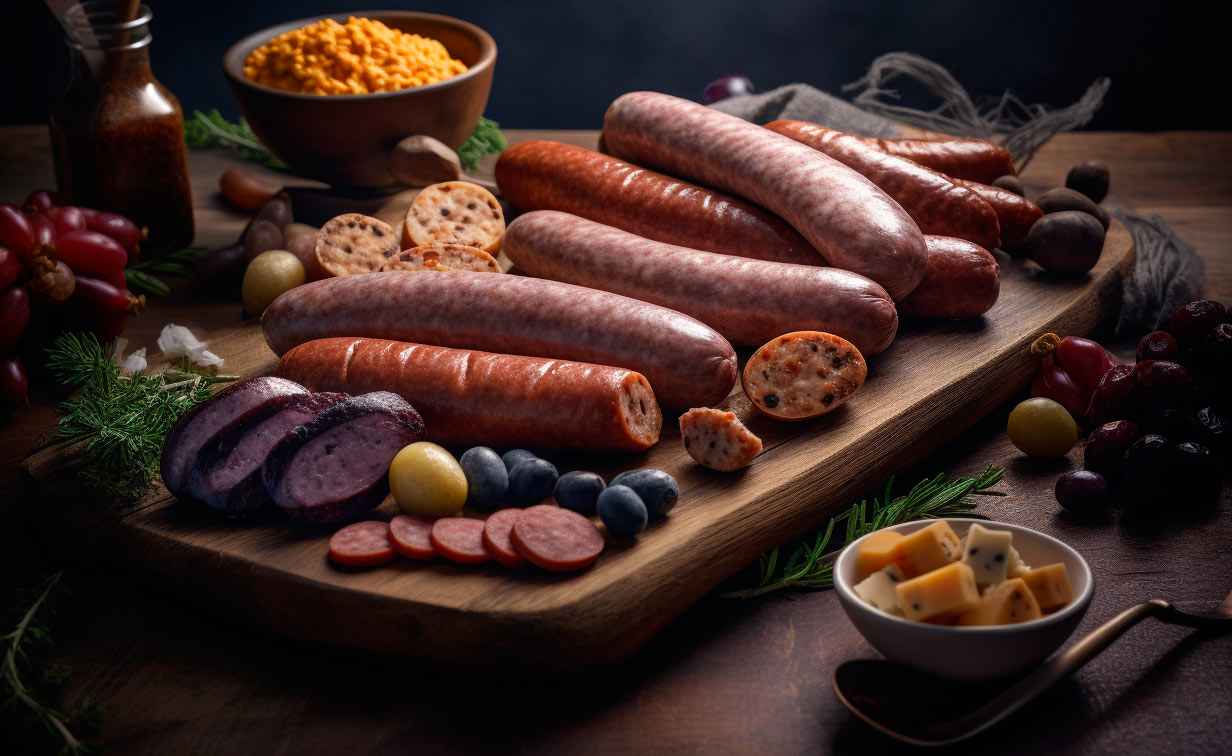
Regional Delights: Sausages Around the World
Sausages are not only diverse in terms of the meats used but also in their preparation methods and regional variations. Let’s take a whirlwind tour around the world to discover some of the most famous sausages:
1. Bratwurst (Germany)
Bratwurst is a beloved German sausage known for its flavorful blend of pork, beef, or veal. It’s often seasoned with marjoram, nutmeg, and white pepper. Bratwurst can be grilled, fried, or boiled and is often served with sauerkraut and mustard.
2. Chorizo (Spain and Latin America)
Chorizo is a spicy sausage made from ground pork, paprika, and chili pepper. It comes in two main varieties: Spanish chorizo, which is cured and ready to eat, and Mexican or Latin American chorizo, which is typically fresh and requires cooking. Chorizo adds a burst of flavor to dishes like paella, tacos, and scrambled eggs.
3. Merguez (North Africa)
Merguez is a North African sausage made from lamb or beef, often spiced with cumin and chili pepper. It’s a staple in North African cuisine and is commonly served in sandwiches or as part of grilled meat platters.
4. Andouille (Louisiana, USA)
Andouille sausage is a key ingredient in Cajun and Creole cuisine. It’s a smoked sausage made from pork, typically used in dishes like gumbo and jambalaya. The smoky, spicy flavor of andouille adds depth to these Southern classics.
5. Boudin Blanc and Boudin Noir (France)
France is famous for its culinary traditions, and sausages are no exception. Boudin blanc is a white sausage made from chicken or pork, often flavored with cream and spices. In contrast, boudin noir is a black sausage made with pork blood, giving it a unique, rich flavor.
6. Longganisa (Philippines)
Longganisa is a sweet and savory Filipino sausage made from ground pork, garlic, sugar, and vinegar. It’s a popular breakfast dish, often served with fried rice and eggs.
7. Hot Dogs (USA)
The quintessential American street food, hot dogs are a type of sausage made from beef, pork, or a blend of both. They are enjoyed in various forms, from classic ballpark franks to gourmet versions topped with a wide array of condiments.
Making Your Own Sausages
If you’re a culinary enthusiast and want to explore the world of sausages further, you can even try making your own sausages at home. It’s a rewarding endeavor that allows you to experiment with different meats, seasonings, and casings to create personalized sausages.
You’ll need some basic equipment, such as a meat grinder, sausage stuffer, and casings. There are countless recipes available online that cater to different tastes and dietary preferences, including recipes for chicken, turkey, and vegetarian sausages.
Conclusion: Sausages Beyond Pork
In the world of sausages, pork may be the most traditional and well-known option, but it’s far from the only choice. Sausages are a versatile food enjoyed by people around the world, and they come in a wide variety of flavors and ingredients. Whether you prefer the smoky richness of a bratwurst, the spicy kick of chorizo, or the leaner profile of chicken or turkey sausages, there’s a sausage out there for everyone.
So, the next time you’re at a barbecue, a food festival, or simply in your kitchen, remember that sausages aren’t limited to pork. Embrace the world of sausages, and you’ll discover a delightful array of flavors and traditions waiting to be explored. Whether pork or another meat, there’s no denying that sausages are a timeless culinary delight that continues to bring joy to tables worldwide.

