
The process of aging meat for steaks, such as brisket or ribeye, is influenced by several factors. Beyond the breed and diet of the cattle, the method of aging plays a crucial role. After slaughtering, the meat remains tender only for a short period before the muscles begin to harden. Therefore, it’s essential to hang the carcass for at least a day to ensure tenderness. Generally, beef for commercial sale undergoes aging for about 20-28 days. This aging can be done in two primary ways: dry aging and wet aging, each impacting the meat’s flavor and texture differently.
Dry Aging
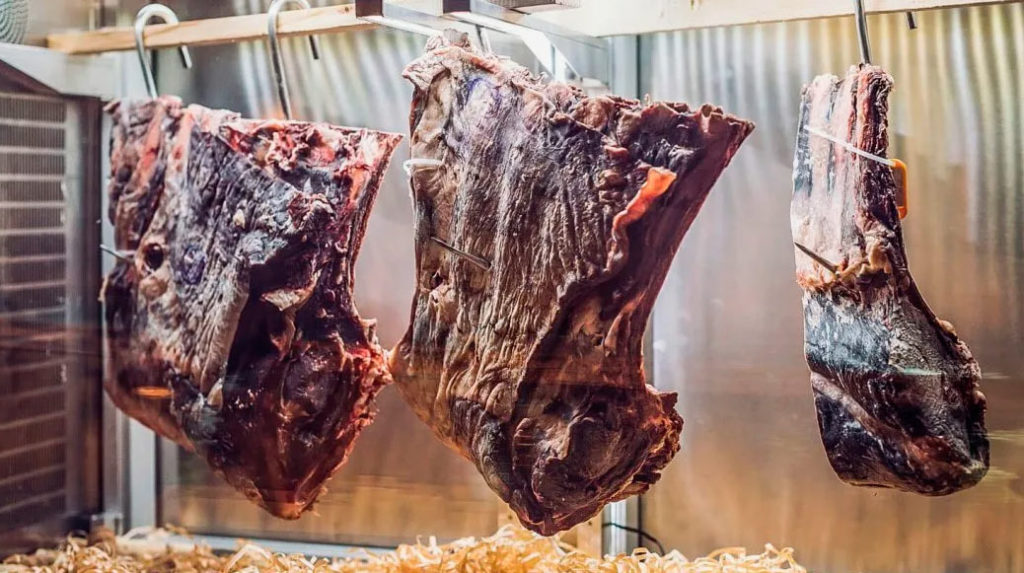
In dry aging, the meat is stored in specialized refrigerators or chambers, either as half or quarter carcasses, without any protective covering. This method is known as ‘dry’ because the meat loses a significant amount of moisture during the process. The loss of moisture concentrates the meat’s flavor, often leading to a more intense, robust taste profile. Dry aging not only enhances the flavor but also affects the texture, making the steak more tender. However, due to the moisture loss, the meat can appear firmer or ‘drier’, though this doesn’t necessarily mean it’s less juicy when cooked. Dry-aged meat develops complex flavors, sometimes described as nutty or cheesy, akin to certain aged wines. This method is often preferred by connoisseurs who appreciate the depth and intensity of flavor that dry aging imparts.
Wet Aging
Wet aging, on the other hand, involves vacuum-sealing the meat in plastic bags, which retains its moisture. This method doesn’t lead to moisture loss, so the weight of the meat is better preserved. Wet aging changes the flavor and texture of the meat as well, but the changes are not as pronounced as with dry aging. The meat tends to remain softer and retains more of its original water content, which can be preferable for those who enjoy a more subtle flavor and a tender, juicy texture.

Water Aged vs Dry Aged Steaks: Consumer Preferences
It’s important to note that dry-aged meat is not universally preferred. Its distinct flavor profile and firmer texture can be an acquired taste. While it holds a niche in the market, particularly among steak enthusiasts and high-end restaurants, it may not appeal to everyone. Wet-aged meat, being milder and more consistent with the taste and texture of standard beef, tends to be more widely accepted.
In summary, the choice between dry aging and wet aging depends on personal preference. Dry aging offers a more intense flavor and a unique texture, ideal for those who seek a gourmet experience. Wet aging, while subtler, provides a tender and juicy steak that aligns more closely with traditional beef flavors.
Water Aged vs Dry Aged Steaks: Aging at Home
As a curing meat specialist, I’m often asked about the best methods for aging steaks at home. The debate between water (wet) aged and dry aged steaks is a topic of great interest. In this article, we’ll delve into the nuances of “wet and dry age steaks,” exploring which method might be better for home aging, the safety of each process, and why one might be superior to the other.
What is a Water (Wet) Aged Steak?
Water aging, more commonly known as wet aging, is a process where steaks are aged in a vacuum-sealed bag. This method retains moisture, resulting in a tender steak without the weight loss seen in dry aging. Wet aging is a controlled process that can easily be done at home with the right equipment, typically a good quality vacuum sealer and a refrigerator.

Why Wet Age Steaks?
The primary reason to wet age steaks is to enhance tenderness while maintaining the steak’s natural juiciness. Wet aged steaks are known for their consistency and subtle flavor enhancements. It’s a process that appeals to those who prefer a traditional beef flavor without the intensified characteristics of dry aging.
Is Wet Aging Steak Safe?
Absolutely. Wet aging is a safe process when done correctly. The key is maintaining the right temperature (usually below 40°F) and using a vacuum sealer to prevent bacterial growth. It’s a straightforward method that can be easily managed at home.
What is Dry Aged Steak?
Dry aging is a process where steaks are aged in a controlled environment with specific humidity and temperature settings. This method allows moisture to evaporate from the meat, concentrating the flavor. Dry aging also allows natural enzymes to break down muscle fibers, resulting in an incredibly tender steak with a unique flavor profile.
Why Dry-Aged Steak is Considered Superior
Many steak aficionados consider dry-aged steak superior due to its depth of flavor and tenderness. The dry aging process creates flavors and textures that you cannot achieve with wet aging. These steaks have a nutty, rich taste and a buttery texture, making them a sought-after choice for gourmet meals.
Is Dry Aged Steak That Much Better?
The answer to this question is subjective and depends on personal preference. Dry aged steak offers a unique, concentrated flavor and tenderness that many find unparalleled. However, it’s important to note that dry aged steaks also come with a higher price tag, due to the longer aging process and the weight loss of the meat during aging.
Which is Better: Dry Aged or Wet Aged Steak?
The “better” method depends on your taste preferences and what you value in a steak. If you prefer a steak with a more intense, nuanced flavor and don’t mind a firmer texture, dry aged is the way to go. If you favor a juicier, more traditional steak flavor, then wet aging might be more suitable for you.
Aging Steaks at Home: Tips and Recipes
- For Wet Aging: Try wet aging a sirloin for about 14-21 days in your refrigerator. Post aging, grill it to your preferred doneness and enjoy the enhanced tenderness.
- For Dry Aging: Set up a dedicated space in your refrigerator or invest in a specialty dry aging fridge like the SteakAger. Try aging a ribeye for 30 days and then searing it on high heat for a crusty exterior and juicy interior.
Equipment for Dry Aging Meat at Home
- Dedicated Refrigerator or Dry Aging Fridge: A fridge like the SteakAger or a converted standard refrigerator. Approximate cost: $200 – $1,500 depending on the model.
- Hygrometer/Thermometer: To monitor the temperature and humidity inside the fridge. Approximate cost: $20 – $50.
- Dehumidifier: For controlling humidity, if not integrated into the fridge. Approximate cost: $30 – $100.
- Fan for Air Circulation: A small fan to ensure even air distribution. Approximate cost: $10 – $30.
- Butcher’s Hooks: For hanging the meat. Approximate cost: $10 – $20.
- UV Light: To prevent bacterial growth, if not included in the fridge. Approximate cost: $30 – $60.
- Sharp Butcher’s Knife: For trimming the meat post-aging. Approximate cost: $20 – $100.
Total Estimated Budget: $320 – $1,860

SteakAger’s high-tech chambers simplify this traditionally complex and labor-intensive process, making it affordable for home reproduction. It provides the ideal conditions for dry aging, ensuring that the meat reaches its peak flavor and texture.
 SteakAger PRO 40 Dry Aging Refrigerator to Dry-Age and Cure Meat at Home
- BEST IN THE LEAGUE DRY-AGING AT HOME
- ALL IN ONE SOLUTION
Equipment for Wet Aging Meat at Home
- Vacuum Sealer: For sealing the meat in airtight bags. Approximate cost: $50 – $200.
- Vacuum Seal Bags: Bags compatible with the vacuum sealer. Approximate cost: $10 – $30 for multiple bags.
- Standard Refrigerator: No special requirements, as regular home refrigerators are sufficient. Approximate cost: If buying new, $200 – $1,000.
- Meat Thermometer: To ensure proper cooking post-aging. Approximate cost: $15 – $50.
Total Estimated Budget: $275 – $1,280
Note:
- The budget for dry aging is generally higher due to the need for specific equipment to control humidity and temperature.
- For wet aging, the primary investment is in a good vacuum sealer, as the aging process is less complex.
- Prices may vary based on brand, quality, and specific product features.
Review of UMAi Dry Aging Bag for Steaks – Sampler Pack of 9
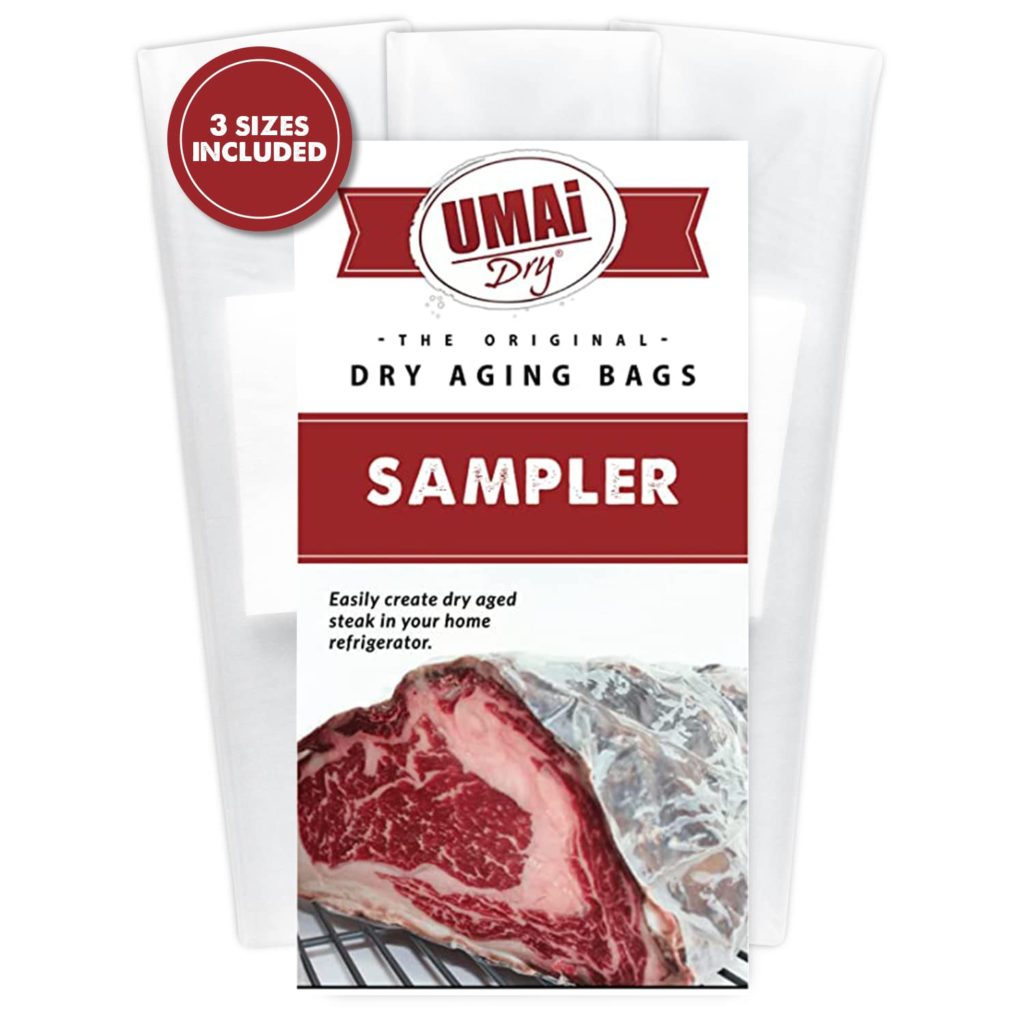
The UMAi Dry Aging Bag for Steaks offers an innovative way to dry age various cuts of meat at home. Priced at $69.99, this sampler pack includes 9 dry aging bags, each designed to cater to different steak cuts like ribeye, striploin, boneless roast, brisket, and bone-in cuts. Known for pioneering dry age technology for over 15 years, UMAi Dry combines traditional artisan methods with modern convenience.
Features and Benefits
- Pioneering Technology: With over 15 years in the field and multiple awards, UMAi Dry is recognized for its expertise in dry aging meat. This experience is evident in the quality and design of their dry aging bags.
- Sampler Pack Variety: The pack includes 3 bags each for three types of cuts – striploin/ribeye, boneless roast/bone-in rib roasts, and brisket/bone-in ribeye steaks. This variety allows home chefs to experiment with different cuts and find their preference.
- Creating Family Traditions: UMAi’s dry aging bags aim to transform home kitchens into gourmet steakhouses. They promise to deliver steaks that are tender, juicy, and buttery, perfect for creating memorable dining experiences.
- Ease of Use: The kit simplifies the dry aging process into three steps – select the meat, seal it in the bag, and store it in the fridge for 28-45 days. After the aging period, the outer bark is trimmed, and the steak is ready to be cooked. The pack also includes comprehensive instructions, recipes, and video guidance.
- No Need for a Vacuum Sealer: One of the significant advantages of UMAi bags is that they do not require a vacuum sealer. The immersion method is used for sealing, and the bag’s special membrane creates an ideal dry-aging environment, mitigating the risk of cross-contamination and odor.
Practical Considerations
- Price Point: At $7.78 per bag, the cost is reasonable considering the specialized function and the potential savings over buying premium dry-aged steaks from a butcher or restaurant.
- Package Weight: The entire package weighs 0.25 kilograms, making it lightweight and easy to store.
The UMAi Dry Aging Bag for Steaks is an excellent product for steak enthusiasts who want to experiment with dry aging at home without the need for specialized equipment like a dry aging fridge. The ease of use, coupled with the ability to age different types of steak cuts, makes it a versatile choice. It’s an affordable way to create high-quality, dry-aged steaks in the comfort of your own home, perfect for those looking to elevate their home cooking experience.
 UMAi Dry Aging Bag for Steaks - Sampler Pack of 9
- Dry Age Bags for Meat Cuts Incl. Ribeye, Striploin, Boneless Roast, Brisket & Bone-In
- NO Vacuum Sealer Required

How to Cook a Steak at Home
- Remove the meat from the refrigerator at least half an hour before cooking so that the piece reaches room temperature.
- Before cooking, pat the steaks dry with paper towels: the drier the steak, the better it sears.
- If using a thermometer, remove the steak from the heat when the internal temperature is about a couple of degrees below the desired level: the meat will finish cooking with its internal heat during the mandatory rest before serving. You can cover the meat with foil for this.
- The temperature for doneness levels varies slightly in different sources and also depends on the country – Australians are used to slightly more cooked meat than Americans. On average, for a standard-sized steak (200-350 g), the thermometer should show approximately the following: rare (steak red and warm in the middle) – 45-56; medium rare (thinner, warmer red uncooked strip in the middle) – 55-63; medium (pink inside) – 63-68, medium well (light pink) – 68-70; well done (faint pink shade or none at all) – 70-77. The recommended temperature for burgers is 71-74.
- You can salt the steak just before cooking or immediately after, it affects the taste but not the quality, just try which you prefer.
Experiment: buy or order different cuts, cook them and record – name, supplier, weight, cooking time, taste, suitable side dishes, and wine. An important result of this approach is that you will always have a ready solution for how to quickly and deliciously feed your family and guests.
Conclusion
In conclusion, the choice between dry and wet aging methods for meat largely depends on personal preferences, available resources, and culinary goals.
Dry Aging: Ideal for Enthusiasts and Gourmets
Dry aging is well-suited for culinary enthusiasts and gourmet cooks who are passionate about exploring complex flavors and textures in meat. It’s particularly appealing to those who:
- Enjoy intense, nuanced flavors and don’t mind a firmer texture in their steak.
- Are willing to invest in specialized equipment and dedicate space for aging.
- Have the patience for a longer aging process and are interested in the science behind meat curing.
- Appreciate the craft of traditional meat aging and are willing to invest more for a premium experience.
Wet Aging: Suitable for Practical Home Cooks
Wet aging, on the other hand, is more suited for practical home cooks who prefer:
- A simpler, more straightforward process without the need for specialized equipment.
- To retain the natural juiciness and traditional flavor of the meat.
- A more budget-friendly option that still enhances the tenderness of the meat.
- Convenience and less monitoring during the aging process.
Summary
- Dry Aging: A choice for the dedicated and adventurous cook, focusing on unique flavors and willing to invest in equipment and time.
- Wet Aging: Ideal for those seeking a simpler, more economical way to improve the quality of their meat with minimal equipment.
Ultimately, both methods have their unique merits, and the choice depends on individual preferences and what one values in the culinary experience of meat preparation and consumption.
So, whether you choose wet or dry aging for your steaks at home, both methods offer unique benefits and can elevate your home-cooked steak experience. Wet aging is practical and accessible, offering a tender and juicy steak, while dry aging, though more labor-intensive, provides a flavor and texture that is hard to replicate. Whichever method you choose, the journey of aging steaks at home is a rewarding one for any culinary enthusiast.
