
Cured meats are various types of meats that have been preserved through the process of curing. This often involves salting, smoking, and drying. Salt is a key ingredient in the curing process as it draws out moisture, thereby inhibiting the growth of bacteria that cause spoilage. Some cured meats are also smoked for flavor and further preservation.
What Are Cured Meats?
The variety of cured meats includes:
- Ham: Both dry-cured, like Prosciutto, and wet-cured, like boiled ham, are popular.
- Bacon: Typically cured and then smoked.
- Salami: A type of cured sausage made from fermented and air-dried meat.
- Bresaola: Air-dried, salted beef that has been aged for several months.
- Chorizo: A type of pork sausage that is cured and smoked, with a variety of seasonings.
- Pastrami: Beef that is brined, partially dried, seasoned with herbs and spices, then smoked and steamed.
Cured meats can be made from pork, beef, poultry, and sometimes game. They are appreciated for their intense flavors, long shelf life, and their role in various culinary traditions around the world. They can be eaten alone, such as in a charcuterie board, or used as ingredients in cooking to enhance the flavor of a dish.

It is possible to prepare cured meat at home. The process typically involves selecting the right cut of meat, curing it with a mix of salt, sugar, and various spices, and then drying it under controlled conditions. Home curing methods can range from simple techniques that don’t require special equipment to more complex setups that might involve a dedicated curing chamber or a smoker. It’s important to follow food safety guidelines carefully when curing meat at home to prevent the growth of harmful bacteria.
What are the benefits of Cured meats?
Cured meats are beneficial because the special drying technology allows the meat to retain valuable components. For example, a piece of cured beef (basturma) after curing retains:
- Protein;
- Vitamins A and B;
- Trace elements;
- Amino acids.
100 grams of cured beef is a “lion’s share” of proteins, about 15-17 grams of fat, and 1.5 grams of carbohydrates.
In addition to its nutritional value, cured meat has other advantages:
- Natural composition. The only preservative used in meat processing is salt. The product does not contain flavorings or other preservatives.
- Multifunctionality. This property is particularly valued by homemakers: the meat in this form can be a full-fledged snack, a main dish, or accompany alcoholic beverages.
- Long shelf life. Jerky (thin strips of dried beef) is convenient to store in a zip-lock bag or a well-sealed glass jar (with a couple of paper napkins inside). At room temperature, the product can be stored in this way for up to 30 days, in the refrigerator – up to 3 months. Large pieces of meat are stored in fabric bags, left in a dry, well-ventilated room.
The downsides of cured meats
- Cured meats are not the best choice for people with kidney diseases due to their high salt content.
- To break down the beef fat in the product, the body produces a large amount of lipase and digestive enzymes. This causes the gallbladder and liver to work overtime. Conditions like chronic pancreatitis, peptic ulcer disease, and chronic gastritis mandate the exclusion of this product from the diet.
- Cured meats contain purines, which when processed release uric acid. Overconsumption of cured meat can lead to joint pain and osteochondrosis.
- To mitigate the effect of table salt and make the product less “aggressive,” specialists recommend eating it with a serving of green vegetables.
Overall, cured meat in any form (such as sujuk, jerky, meat chips, etc.) is a beneficial and “convenient” product if consumed wisely.
If you enjoy treating yourself and your loved ones to cured meat with beer, consider the following pairing tips:
- Brown ale pairs well with spicy and piquant meat.
- Chicken and turkey snacks are great companions for IPA.
- Dark beer takes on a new flavor with aromatic horse meat.
- Lager is best paired with masterfully prepared cured pork.
How to Choose Spices for Cured Meat
The taste of your cured meat depends significantly on the spices you select.
Your choice is entirely dependent on your taste preferences. However, if you are curing meat for the first time, opt for fine or medium grind salt (preferably non-iodized). To this, add white sugar and two types of pepper: black and pink (either ground or whole peppercorns).
You are free to experiment, but there are a few tried-and-tested combinations:
- Beef with pepper and fenugreek.
- Pork with ground paprika (smoked is better), garlic powder, chili, “five-spice” seasoning, and Sichuan pepper.
- Lamb with garlic, cumin, lemon balm, thyme, and other aromatic herbs.
If you’re feeling adventurous with sweetness, replace granulated sugar with cane or brown sugar, or use maple syrup. Try different spices to achieve a harmonious, robust flavor.
How to Properly Cure Meat in the Kitchen
The technique of curing was devised so that cured meat would not spoil and could be stored for a long time. Maintain cleanliness: wash knives, thoroughly wipe down surfaces, and use only sterile utensils. This prevents harmful bacteria, which can cause dangerous diseases, from contaminating the meat. Wash your hands thoroughly during preparation to protect against botulism and other infections. Only prepare meat purchased from reputable vendors.
Do not skimp on salt: it is a natural preservative and the most accessible household alternative to industrial preservatives used in the production of sausages and jamón. Well-salted meat is protected from bacteria, which cannot penetrate it.
Methods of Curing Meat
Before air-drying meat in the oven, a dehydrator, or in open air, it must be salted. Read also Curing Salt: The Secret to Perfectly Cured Meat.
There are three methods: dry, wet, and combined.
Dry Curing
Prepare a deep container and sprinkle salt at the bottom. Place the meat in and sprinkle more salt on top, spraying the layers with a small amount of brandy for a spicy flavor. Leave the meat in the refrigerator for 3-4 days, turning it periodically for even salting. Rinse it in cold water and pat dry with a paper towel.
Wet Curing
Cut meat cleaned of fat and films into strips. Prepare a brine solution:
- At least 5 tbsp of salt per 1 liter of water;
- 1 tbsp of sugar;
- 20-30 allspice berries;
- 4-5 bay leaves.
Boil the mixture for 5 minutes, strain, and cool it down. Pour the freshly prepared brine into a glass jar or deep ceramic dish. Submerge the meat in it and leave it in the refrigerator for 2-3 days, turning it every day. Drain the liquid and leave the meat under a weight for an hour to remove the remaining brine. Pat it dry with a paper towel.
Combined Curing
Salt the meat thoroughly in the refrigerator without adding any liquid. Prepare a mixture of red wine (can be replaced with apple vinegar), salt, and garlic. For 1 liter of liquid, take 1 tbsp of salt and 3-4 cloves of garlic. Pour it over the meat and leave it in the refrigerator for 10-12 hours. Remove the excess liquid and dry the surface of each piece.
After salting, apply a mix of spices of your choice to the dry surface of the meat. Essential ingredients are salt and red pepper, which are natural preservatives that protect the meat from decay. Add other spices according to your preference: garlic, caraway, rosemary, coriander, cumin, mustard, cloves, and other seasonings. Cover each piece of meat so that a thick layer forms on the surface.
How to Properly Cure Meat at Home
There are three ways to air-dry pre-salted pieces of meat. The classic recipe involves a lengthy process of air drying. If you want to quickly obtain delicious cured meat, use a home oven or a dehydrator. Read also Review of meat curing chamber manufacturer brands on Amazon: SteakAger, Magic Mill, Homdox, OSTBA
How to Cure Meat at Home with Cheesecloth
Wrap each piece, smeared with spices, tightly in ordinary cheesecloth. Place the meat in a dry and clean container and leave it in the refrigerator for a week. It’s fine if you forget about it and overdo it, but rushing is not recommended. After 7 days, take the meat out and rub it again with a mixture of your favorite spices. Wrap each piece in a new clean cheesecloth and tie it tightly with strong thread or jute to hang on a rope or hook.
To prevent the meat from spoiling and to cure it gradually, create the perfect conditions. The room should be well ventilated, and the air temperature should remain between 4 to 25 ℃. It’s okay if the meat heats up to 40 ℃, but make sure it does not receive direct sunlight. In summer, use a refrigerator to prevent it from overheating. Hang the meat pieces in cheesecloth so that air can freely circulate between them.
If you are curing poultry, you can try the delicacy after a few days. Do not keep white meat hanging in cheesecloth for more than a week. Lamb, beef, pork, or venison should be left to cure for 2-4 weeks, depending on the thickness of the pieces. When the time is up, take out the meat and slice it into thin slices to taste.
Anyone can prepare cured meat in their own kitchen.
However, many are interested in where to cure meat at home if it is not possible to create ideal conditions outdoors. You can accelerate the natural process by using a special dryer or oven.
How to Cure Meat in a Convection Oven
Before curing pork, lamb, beef, or poultry at home, cut it into thin strips and marinate it. Roll each piece in spices and hang it on a special rack. Place a tray underneath to catch any excess moisture. For the first hour, set the temperature to 80 ℃, then reduce it to 50℃. Leave the meat in the oven for 2.5-4 hours. Remove it from the rack or skewers and try it.
How to Cure Meat in an Electric Dryer
A special dryer for vegetables and fruits also dries small pieces of meat. You will not be able to achieve the taste that comes with long air drying, but it will turn out soft and tender, perfect for a snack. Before curing the meat in the dryer, slice it into thin slices (no more than 1 cm thick). Prepare a marinade from your favorite spices, vegetable oil, mustard, salt, and sugar. Let the slices marinate in it for 1 hour, then lay them out on the rack. Set the dryer to 60 ℃ with maximum convection. Spread the meat slices on the rack and leave for 3-4 hours. Turn them over and wait the same amount until ready.
How to Cure Meat in Meat Curing Chamber and Meat Curing Cabinet
A Meat Curing Chamber and Meat Curing Cabinet are specialized environments used for the process of curing meat, which is a food preservation and flavoring process. Here’s a brief overview of both:
Meat Curing Chamber: A meat curing chamber is a controlled environment designed to cure large quantities of meat. It is typically a room-sized space where temperature, humidity, and airflow can be precisely regulated. The aim is to create the perfect conditions for curing meats such as sausages, hams, and salami. These chambers are often equipped with sensors and automated systems to maintain the necessary conditions for the duration of the curing process, which can range from weeks to several months.
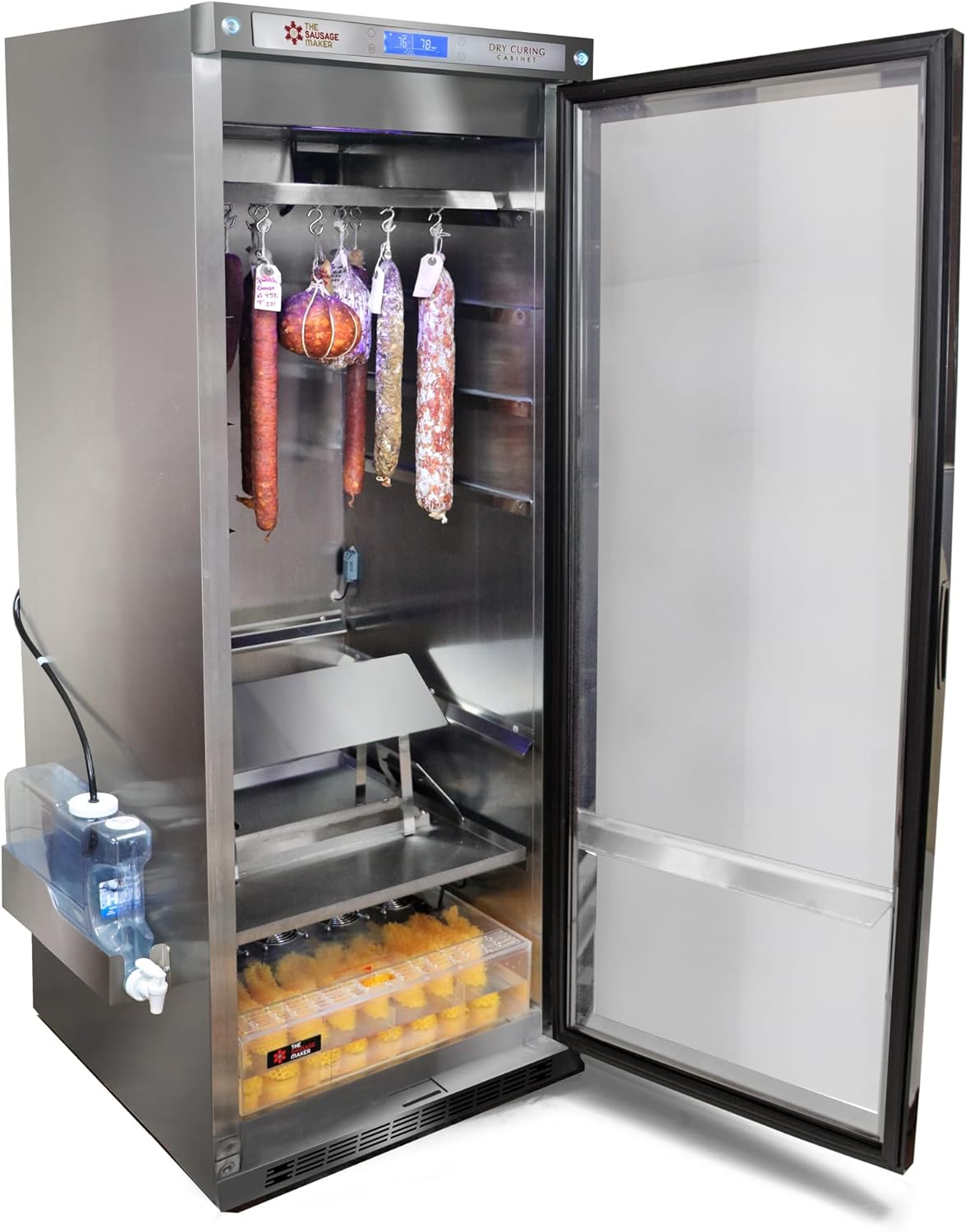 The Sausage Maker Digital Dry Curing Cabinet, Full Stainless Steel Meat Dehydrator Unit
- Perfect for making your own homemade charcuterie
- Able to Hold 4 Shelves
Meat Curing Cabinet: A meat curing cabinet, on the other hand, is a smaller unit, more suitable for home use or small-scale operations. It functions similarly to a curing chamber but is the size of a large refrigerator or cabinet. Inside, hooks or racks are provided to hang meats, and the cabinet is designed to control the temperature and humidity at levels ideal for the curing process. Some cabinets also have systems to introduce smoke or specific air compositions to aid in the curing and flavoring of the meat.
Both chambers and cabinets are designed to replicate the traditional processes used for curing meats before modern refrigeration, but with a greater level of control and consistency, resulting in safer and more flavorful cured meats.
 SteakAger PRO 15 in-Fridge Dry Aging Chamber
- PREMIUM QUALITY DRY-AGING AT HOME
- ALL IN ONE SOLUTION
 SteakAger PRO 40 Dry Aging Refrigerator to Dry-Age and Cure Meat at Home
- BEST IN THE LEAGUE DRY-AGING AT HOME
- ALL IN ONE SOLUTION
How to Store Cured Meat
Cured meat, a spicy delicacy, is moisture-averse, so it should be kept in an airtight and dry container. To protect the meat from water, wrap it in a layer of parchment or line it with paper towels. If condensation appears on the surface of the slices, they will absorb it. Meat packaged in this way will last up to 6 months in the refrigerator. However, there is a way to double its shelf life.
