
“Coppa,” “Capocollo,” and “Capicola” (sometimes spelled “Capocolla”) are all terms used to refer to a type of Italian cured meat, but they are not entirely interchangeable, and there are some subtle differences between them: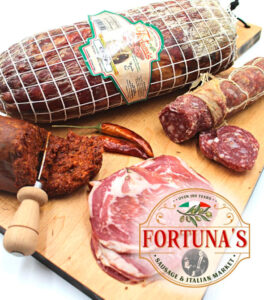
- Coppa (Coppa di Parma):
- Coppa is also known as “Coppa di Parma” or “Coppa Piacentina.”
- It is made from the muscle that runs from the neck to the fourth or fifth rib of the pork shoulder or neck.
- The meat is dry-cured with salt, sugar, and various spices, such as black pepper and sometimes garlic.
- Coppa is typically aged for several months, during which it develops its distinct flavor and texture. It has a delicate, sweet, and slightly nutty taste.
- Capocollo (Capicollo):
- Capocollo is derived from the neck of the pig (specifically the muscle between the head and the fourth or fifth rib).
- Like coppa, capocollo is also dry-cured with a mixture of salt, sugar, and spices, including hot red pepper flakes.
- It is typically aged for a longer period than coppa, which gives it a more intense and spicy flavor.
- Capicola (Capocolla):
- Capicola is a term often used in the United States to refer to Italian-style cured pork shoulder or neck.
- It can be made from various cuts, including the coppa and the capocollo.
- The meat is dry-cured, often with a combination of salt, sugar, paprika, garlic, and other seasonings.
- Capicola can have a milder flavor compared to capocollo, depending on the specific recipe and curing process used.
The similarity in the pronunciation of words like “Coppa,” “Capocollo,” “Capicola,” and “Capocolla” is due to their Italian origin and the way Italian words are pronounced. Italian has its own pronunciation rules and phonetic patterns, which can result in words sounding similar to English speakers.
Try Fortuna’s Imported Coppa Capicola right now!
 Fortuna's Imported Coppa Capicola - Nitrate & Gluten-Free Dry Cured Pork
- 3oz x 3 Packs
- Pre-Sliced Thin for Easy Meals
Capocolla for Your Charcuterie Board
A charcuterie board is a delightful spread of cured meats, cheeses, and accompaniments that’s often served as an appetizer or a centerpiece at gatherings. Charcuterie, which originates from the French word “charcuterie,” is the art of preparing and preserving meats, and it typically involves various methods of curing, smoking, and aging.
| Image | Product | |
|---|---|---|
Great Choise  | Extra Large Charcuterie Board Set
| Check Price |
Best Price  | Charcuterie Boards Gift Set
| Check Price |
Best Seller  | Charcuterie Cheese Board and Platter Set
| Check Price |
Rustic Style  | Decorative Wooden Serving Charcuterie Board
| Check Price |
HEAVY-DUTY  | Extra Large Cutting and Charcuterie Board
| Check Price |
Read Top 7 of The Best Wood for a Wood Charcuterie Board
Here’s how you can create and enjoy a charcuterie board:
1. Selection of Cured Meats:
- Choose a variety of cured meats for your charcuterie board. Common options include prosciutto, salami, coppa, chorizo, and capicola.
- Arrange the meats on the board in an aesthetically pleasing manner, folding or rolling them for a visually appealing presentation.
2. Assorted Cheeses:
- Complement the meats with a selection of cheeses. Popular choices include brie, cheddar, Gouda, blue cheese, and goat cheese.
- Slice or cube the cheeses and arrange them alongside the cured meats.
3. Accompaniments:
- Enhance the flavors with an assortment of accompaniments such as:
- Fresh fruits like grapes, figs, or apple slices.
- Nuts, such as almonds or walnuts.
- Olives or pickles for a briny contrast.
- Crusty bread, baguette slices, or crackers.
4. Condiments:
- Offer a variety of condiments and spreads, such as grainy mustard, honey, chutney, or fruit preserves, to complement the meats and cheeses.
5. Presentation:
- Arrange everything on a wooden board, platter, or slate to create an attractive and visually appealing display.
- You can add fresh herbs or edible flowers for a touch of color and freshness.
6. Serving:
- Provide small knives or utensils for guests to slice and serve the meats and cheeses.
- Encourage guests to mix and match different elements to create unique flavor combinations.
7. Pairing:
- Consider serving your charcuterie board with a selection of wines, such as red wine for the meats and white wine for the cheeses. Sparkling wine or champagne also pairs well.
8. Enjoyment:
- Charcuterie boards are perfect for socializing and snacking. Guests can graze on the various offerings while enjoying conversations and drinks.
9. Customization:
- Tailor your charcuterie board to suit your preferences and dietary restrictions. You can include vegetarian options like marinated tofu or roasted vegetables.
How to cook Homemade Capocolla?
Making homemade Capocollo, also known as Capicola or Capocolla, is a multi-step process that involves curing and aging pork. Here’s a simplified recipe to create your own homemade Capocollo:
Ingredients:
For the Curing Stage:
- 5-6 pounds (2.3-2.7 kg) pork shoulder (butt) or neck, with fat cap intact
- 3 tablespoons kosher salt
- 2 teaspoons pink curing salt #2 (Prague Powder #2)
- 2 tablespoons sugar
- 2 cloves garlic, minced
- 2 teaspoons crushed red pepper flakes (adjust to your spice preference)
- 1 teaspoon black pepper, coarsely ground
- 1 teaspoon fennel seeds (optional)
For the Aging Stage:
- Natural pork casing (available at specialty food stores or online)
- Butcher’s twine
- A Meat Curing Chamber, dry aging chamber, or cool, dark place with controlled humidity and temperature (around 55°F or 13°C)
 SteakAger PRO 15 in-Fridge Dry Aging Chamber
- PREMIUM QUALITY DRY-AGING AT HOME
- ALL IN ONE SOLUTION
 SteakAger PRO 40 Dry Aging Refrigerator to Dry-Age and Cure Meat at Home
- BEST IN THE LEAGUE DRY-AGING AT HOME
- ALL IN ONE SOLUTION
Instructions:
1. Preparation:
- Rinse the pork shoulder under cold water and pat it dry with paper towels.
- In a small bowl, mix together the kosher salt, pink curing salt #2 (read Curing Salt: The Secret to Perfectly Cured Meat), sugar, garlic, red pepper flakes, black pepper, and fennel seeds.
2. Curing:
- Rub the spice mixture evenly all over the pork shoulder, making sure to coat it thoroughly.
- Place the seasoned pork shoulder in a large resealable plastic bag, removing as much air as possible. Alternatively, you can wrap it tightly in plastic wrap.
- Place the bag or wrapped pork shoulder in a container and refrigerate for about 10-14 days. Turn the meat every few days to distribute the curing mixture evenly.
3. Rinsing:
- After the curing period, remove the pork shoulder from the refrigerator.
- Rinse it thoroughly under cold water to remove excess salt and spices. Pat it dry with paper towels.
4. Stuffing:
- If using natural casings, soak them in warm water for about an hour to soften.
- Carefully stuff the rinsed and dried pork shoulder into the natural casings, tying the ends with butcher’s twine to secure them.
5. Drying and Aging:
- Hang the stuffed Capocollo in a cool, dark, and well-ventilated place with controlled humidity and temperature (around 55°F or 13°C). A basement, wine cellar, or dedicated curing chamber works well.
- Allow the Capocollo to air dry and age for 3-4 months or longer, depending on your taste preference. During this time, the meat will lose moisture and develop its characteristic flavor and texture.
- Check the Capocollo regularly for any signs of mold growth or spoilage. If any mold appears, you can wipe it off with a cloth dipped in vinegar.
6. Serving:
- Once the Capocollo has aged to your desired level of firmness and flavor, it’s ready to be sliced thinly and served as part of a charcuterie board or in sandwiches.
Homemade Capocollo is a rewarding project, but it requires patience and proper curing and aging conditions to achieve the desired results. Make sure to follow food safety guidelines throughout the process, and if you’re new to charcuterie, consider seeking guidance from experienced home charcutiers or resources dedicated to the craft.
